
Blog / Behind Lodestar
Meet the owner of Britain's next mobile network operator
From playing BrickBreaker on my mum’s BlackBerry to testing my own 4G network around my local estate: I’m Blake Williams, and this is the story behind Lodestar.
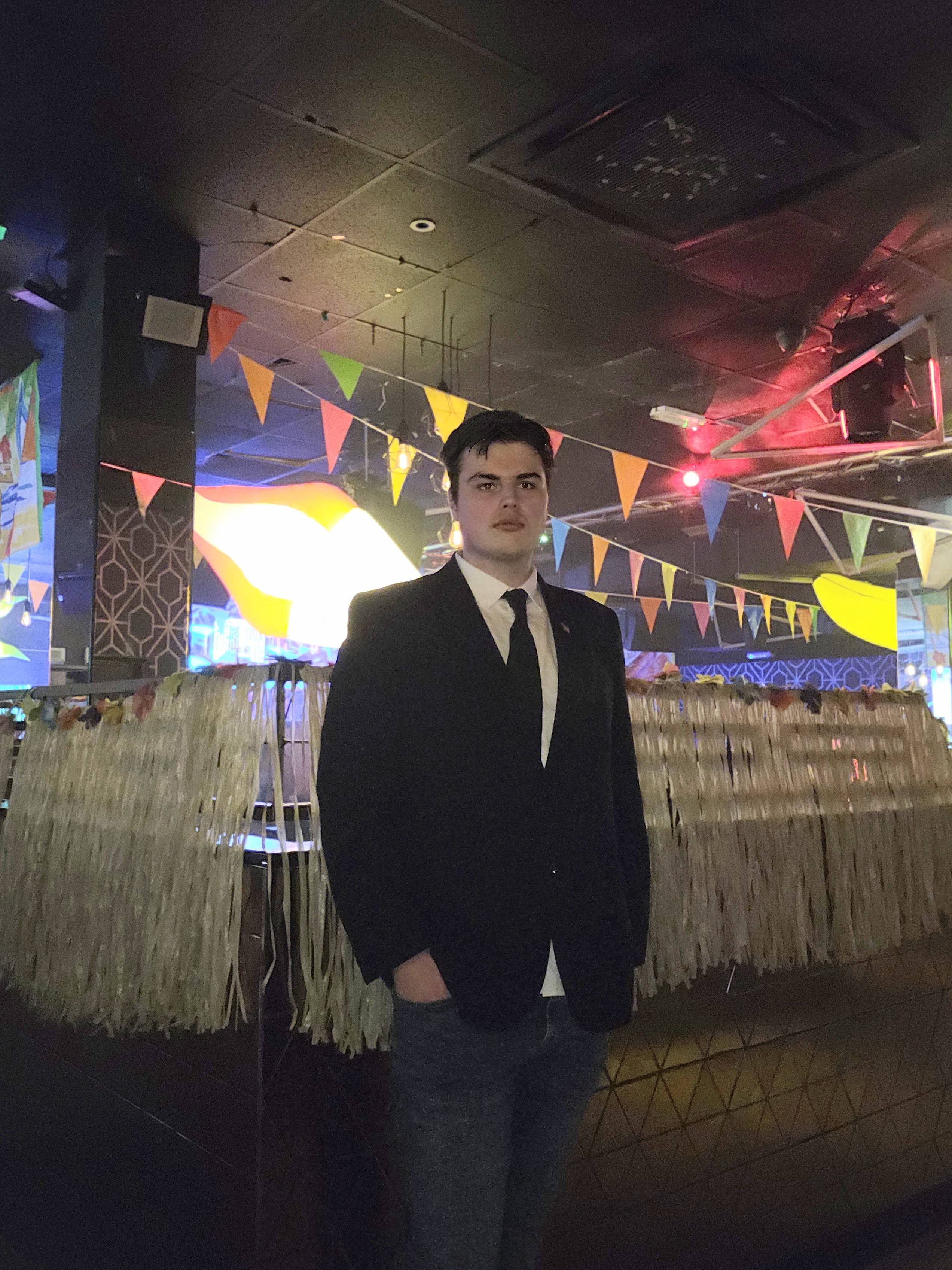
I’m Blake Williams, I’m from Coventry, and I’m the person building Lodestar Networks. I want to introduce myself properly.
I spend a lot of time talking about mobile networks, working on them and thinking about what Lodestar could become. But there’s a person behind all of that, with a reason for starting and a lot still to learn along the way.
I was born in 2004. I’m autistic, I’ve spent much of my life in care, and I’m a care leaver. Those are parts of my story, alongside a fascination with communications that has been there since I was very young.
Lodestar brings that interest together with something I want to do for other people: build an affordable mobile network that connects people, businesses and communities.
My ambition is to cover my home town with Lodestar 4G, then keep expanding. The next stage I’m most excited about is rolling out sites and seeing more people able to connect.
It started with wanting to know how things worked
At about three years old, I was already interested in my mum’s landline phones and the Sky box.
Looking back, those everyday devices were my early introduction to communications technology. As I got older, I became more interested in the systems behind them: how a phone could connect people in different places, and how programmes reached the television.
For my sixth birthday, I got a Nintendo DS. I figured out how to connect it to Wi-Fi. Around seven, I was using my mum’s BlackBerry, including playing BrickBreaker.
These were ordinary devices, but they were some of my early ways into technology. There was something to try, something to figure out and another question behind whatever I’d just learned.
That curiosity stayed with me. I’m fascinated by communications networks as these giant beasts that provide what people need. There’s so much happening behind something that looks simple from the outside.
You pick up a phone, make a call or open a website. Behind that are radios, connections between different places, software and systems that all have to work together.
I wanted to understand more of that. Eventually, I wanted to build some of it myself.
Finding other people who understood the interest
During 2020 and 2021, I was in the CellMapper Telegram group and an offshoot chat called The Off Topic.
That brought me into contact with a lot of like-minded people. There were people interested in mobile networks, coverage, equipment and the technical details that most people probably wouldn’t want a long conversation about.
It was a mixed experience. Some people were horrible and some were nice. I’m still friends with some of the people I met there.
Those friendships are part of this story. Being able to speak to people who share an interest gives you somewhere to discuss what you’re learning and hear about things you haven’t come across yet.
It also shows how many different ways there are into this subject. Someone might start by mapping coverage, someone else by looking at equipment, and someone else by trying to understand the software. There’s a lot to learn from people coming at it from different directions.
I’d admired wavemobile for years. I now speak regularly with Anthony Timpson on Telegram, and he has helped fund Baicells Nova230i Pro equipment for Lodestar, alongside his wider support.
I also speak with James Body of Telet on WhatsApp. James has helped significantly too.
I’m grateful to both of them. Their support belongs in the story of how Lodestar is developing, along with the friends and other people I’ve met through this interest.
Getting a real phone connected
The moment I knew I could do this was when my phone could connect, use data and make calls.
The first phone I got working was an iPhone 16. It connected through a Baicells indoor femtocell, with the core running on an OVHcloud VPS.
A femtocell is a small mobile base station. The core is the part of the network behind the radio connection that manages things such as subscribers and their data connections.
Getting those parts working with a handset brought the project into something I could actually use and test. There was a real phone connecting through equipment and systems I was working on.
That first working connection mattered. It gave me something concrete to build on and a way to keep testing what I was doing.
There have also been outdoor experiments. One setup involved leaning a radio out of a window on a two-metre metal pole.
I went around my local housing estate and up a hill, testing data speeds and calls to see how the connection behaved as I moved around. I was trying the equipment in the places around me and learning from what it could do there.
Those experiments help turn questions into observations. How does the connection behave here? What happens as you move further away? Can you make a call? What data performance do you see?
Each test gives you something to investigate and another part of the network to understand.
As I move towards more sites, I want those tests to help me understand where a connection is useful, what needs improving and what the next installation should do better.
The work behind the connection
There’s plenty of everyday work behind Lodestar.
A day can involve checking emails, looking at Grafana, applying patches and working on the core. Grafana helps me see what systems are doing through monitoring and dashboards.
There’s development work, maintenance and investigation. There are also the conversations and practical tasks involved in moving the project forward.
Some of that work produces something easy to show, such as a phone connecting or a test out with the radio. Other work sits behind the scenes, keeping systems maintained or helping me understand what needs attention.
If you ask me which part has tested my persistence the most, the answer is IMS. Definitely IMS.
IMS stands for IP Multimedia Subsystem. It is the service platform behind things such as Voice over LTE, with several components handling registration, call signalling and media. Getting those parts working together has been one of the hardest parts of building Lodestar.
One-way audio has been a big problem. Getting a call to connect is only part of making it useful; people need to be able to hear each other too.
I remember testing calls with a music line on 170, playing Justin Timberlake. That detail has stayed with me from working through the voice side of the network. After spending so much time on one-way audio, whether you could actually hear the call was a very practical test.
A handset making a data connection is one part of the picture. Making the different parts of a mobile service behave properly together brings more to work through.
That has been a big part of the learning. You need to understand the individual pieces and what happens between them.
It takes persistence to keep looking into something that isn’t working as it should. Sometimes the useful progress is understanding the problem more clearly and knowing what to investigate next.
The work is hard, but it’s rewarding. It’s a hobby that has become a way of building something I want to help other people with.
I also want to make the learning more accessible through guides. If someone is interested enough to start asking how this works, I want them to feel welcome to learn.
There are plenty of things to get your head around. Clear explanations can give someone a starting point, and that matters when you’re trying to understand an unfamiliar subject.
Building for the days when the power goes out
Resilience is another big part of what I want Lodestar to become. People need to communicate during a power cut, and I want that need to shape the network while I’m building it.
Reading about UK government planning for major power failures, alongside the wider discussion of “Black Sky” events, has helped me think about how Lodestar should cope with a prolonged outage. The government’s National Risk Register describes how a national power outage could affect communications and other essential services. It makes you think about the connections between things: electricity, telecoms, access to information and the people relying on them.
My rollout target is at least 72 hours of battery backup at selected key sites. Our first full macro site is still to be deployed, so that is a target I’m designing towards as the rollout develops. I want to start with those key locations, learn from installing and testing the backup, then extend it to all sites where possible.
The batteries are intended to power everything we use at a site. That includes the radio, routers and the equipment carrying traffic back to the rest of the network. The power requirement needs to cover the whole installation, with enough usable battery capacity for the load it will actually carry.
I’m also planning Starlink backup and point-to-point links between sites. Those links are intended to give us other ways to carry traffic if a site’s usual connection becomes unavailable. Their own power, the equipment at the other end and the route onwards all need to be part of the design.
The aim is to keep the normal services available through an outage: data, internet access, calls and texts. That means thinking about the core and voice systems behind the radios too. A working site depends on the wider systems that recognise subscribers, carry their traffic and connect their calls.
Ofcom’s network resilience guidance also informs that approach. Power backup, alternative connections, maintenance and testing all have a place in building a service people can depend on.
As the sites are installed, I want to test what happens when mains power is removed and when the usual backhaul fails. Can a phone connect afresh? Can it still use data and make a call? How does the service behave while running on backup? The runtime target needs checking with the equipment operating under realistic conditions.
Getting that right takes equipment, money and ongoing care. Starting with selected key sites gives me a practical place to begin, while keeping the wider aim in view: bringing the same protection to as much of Lodestar as possible. Affordable connectivity and a network that can cope with disruption are both part of what I’m trying to build.
What I want Lodestar to become
My ambition starts in my hometown.
I want people to be able to connect to Lodestar 4G. I want that connection to be useful to local people, businesses and local authorities.
That’s the kind of success I’m working towards: a network being used in the place it serves, by people who have a reason to use it.
From there, I’d like to expand across the country. That’s a much bigger ambition, and getting there means continuing to build, test, learn and develop the business.
The next thing I’m most excited about is rolling out sites. That’s the next part of putting the local ambition into practice.
Affordability is central to what I want to do.
I want Lodestar to be accessible to people who don’t have much money. Having less money shouldn’t mean your need to communicate matters less.
A phone connection can be part of keeping in touch with family, looking for work, dealing with an organisation or running a small business. It can be something people need every day.
That makes affordability a practical concern. It needs to influence the service I’m trying to build and the decisions made along the way.
Lodestar is a fresh company, and the company is completely free of borrowing.
That’s how I’m starting this business. As it develops, I want to keep thinking carefully about what it costs to provide the service and how to make it affordable for the people who need it.
There’s a lot involved in turning that aim into something sustainable. Equipment, connectivity, maintenance and the work of running a network all need to be considered.
My intention is to build with those realities in mind and keep the reason for doing it in view.
I’m interested in the technical side, but the point of a communications network is that people can use it. The work has a purpose beyond the equipment itself.
That’s why the local ambition matters so much to me. I want to be able to see Lodestar connecting people and organisations around me, then build on that experience.
Your past doesn’t have to define your future
I also want this story to say something to young people who have an interest they want to pursue.
Don’t let someone tell you that you can’t achieve something. There will be a lot to learn, and it can be hard work, but an interest can give you somewhere to start.
You don’t have to understand an entire mobile network before you can begin learning about one. You can start with a question, work on a small part and keep building your understanding.
I’m still learning. There are people with much more experience than me, and having people I can talk to has helped. Being willing to learn is part of moving the project forward.
For other care leavers, there’s something I particularly want to say: don’t let your past define your future.
I’ve spent much of my life in care. That’s part of my life, and I’m choosing to share it because it’s part of who is behind Lodestar.
I also have interests, ambitions and things I want to achieve. I want other care leavers to have room to talk about theirs too.
Everyone’s circumstances are different. My story is my own, but I hope sharing the work as it develops gives someone else encouragement to explore an interest or pursue something they care about.
For me, that interest has led from landline phones, a Sky box, a Nintendo DS and a BlackBerry to working on a mobile network.
There’s more work ahead. I want to keep sharing it, including the learning and experiments that happen along the way.
If you’d like to follow Lodestar, keep an eye on the updates here. I’d also like people to be part of the network in whatever way they can and want to help.
That could mean discussing site hosting, helping with radios or something in between. People have different skills and different amounts of time, and I want the invitation to be open to people at different stages of learning too.
If you’re interested, you can email me at hello@lodestarnetworks.co.uk. We can talk about what you’re interested in and where you might be able to help.
I’m building towards something I want people to be able to use, and I’d like you to follow the story as it happens.
Share this page
If copying is unavailable, use this link: https://lodestarnetworks.co.uk/blog/meet-the-owner-of-britains-next-mobile-network-operator/